A very particular set of skills helps with winter driving
Published: Tuesday 27 October 2026
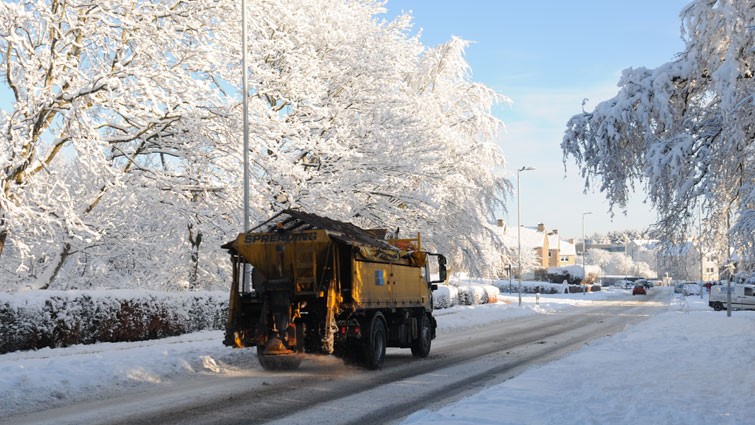
The second day of the council’s annual Winter Awareness Week is focusing on driving in winter.
Road conditions can be tricky, especially during periods of extreme weather. But our fleet of gritter drivers are out there during the worst of the weather, doing everything they can to make conditions as safe as possible.
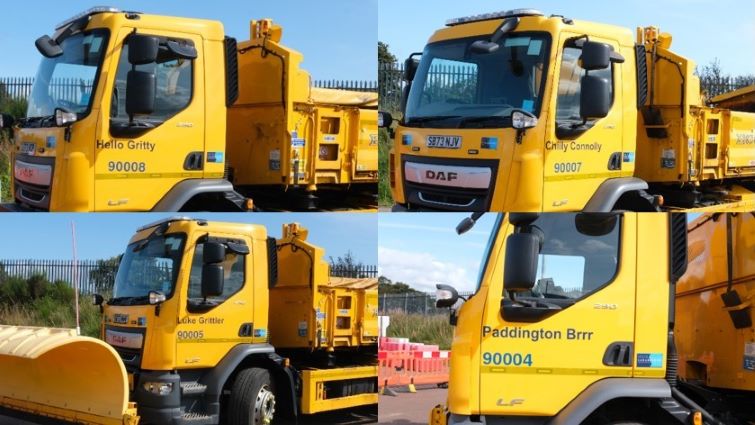
For the sixth year in a row, we are providing a dedicated gritter tracking map on our website, showing the routes our gritters are taking – and displaying the gritter names chosen by local school pupils, including Hello Gritty, Chilly Connolly, Luke Grittler and Paddington Brrr.
Councillor Robert Brown, Chair of the Community and Enterprise Resources Committee, said: “Our gritter-tracking map lets you see, in real time, exactly where our gritting fleet is at any given point in the day.
“The dedicated drivers are out there no matter the road conditions, so although this is a fun and interactive way to keep in touch with what is going on, it also has a serious message.
“Our staff deserve a huge amount of credit for their hard work, professionalism and dedication.”
Driving always requires constant care and attention but, during winter, specific driving skills should also be used.
Councillor Brown added: “Today’s advice will hopefully make motorists realise that winter can bring about some very challenging driving conditions.
“Although our tips will come in handy, please first and foremost make sure you always drive to the condition of the road.
“Depending on the severity of the weather, it may even be advisable not to drive at all unless the journey is an emergency or absolutely essential.
“The most important thing is to stay safe at all times.”
Snow and ice
- Always clear snow and ice from your vehicle before driving – snow sliding off the roof or bonnet could block your view and be a danger to yourself and other road users
- Make sure that all of your windscreen has been fully defrosted before setting off on your journey so your view is not obstructed
- Avoid harsh steering, braking and acceleration, especially if there is a possibility of black ice
- Remember that, even after gritting has taken place, ice and snow may still be present – it takes time for grit to take effect, especially if roads are quiet
Gritters
- Check the Gritting Routes and track our gritters in real time on our website
- Stay back from gritters and don’t overtake
- Even when gritters have treated routes, ice can still form afterwards
Fog
- Use dipped headlights and your fog lights – high beam does not make it easier to see
- Don’t speed up if visibility suddenly improves, as more fog patches are likely
High winds
- High-sided vehicles have particular difficulties and may swerve suddenly due to severe gusts, especially along exposed sections of roads and bridges
- Keep a safe distance – in particular when passing a high-sided vehicle
Heavy rain
- Watch out for water ponding – if your vehicle loses grip or begins to aquaplane, take your foot off the accelerator to slow down and do not use the brakes
Top tip: If you get stuck in a snowdrift, use the highest gear you can to move slowly backwards and forwards to try and get out.
For more information see:
- Roads in Winter pages on the council website
- Ready Scotland for advice on winter at home, travelling, at work and in the community
- Driving in Bad Weather from Transport Scotland

27 October 2026
A very particular set of skills helps with winter driving
26 October 2026
Preparing now for winter on the roads will help us all
22 October 2026
Pesticide use reduced across South Lanarkshire
21 October 2026
Donation helps charity build on work that sees children SMILE
19 October 2026
Resurfacing on way for road between Muirkirk and Strathaven
16 October 2026
First class reports for schools across South Lanarkshire
15 October 2026
Tenants settling in at new development in East Kilbride
14 October 2026
Never too early to think about the Christmas lights switch on events
14 October 2026
Archaeology group can do more digging thanks to funding
13 October 2026
Remember, remember, bonfire and fireworks displays need a licence